
8 October 2026 · African Startups · Venture Capital · Debt Financing · Africa · DFIs · Funding Startups
Not All Money Is the Same
What African startup money is actually made of in 2026.
By Amschel Kariuki

8 October 2026 · African Startups · Venture Capital · Debt Financing · Africa · DFIs · Funding Startups
What African startup money is actually made of in 2026.
By Amschel Kariuki
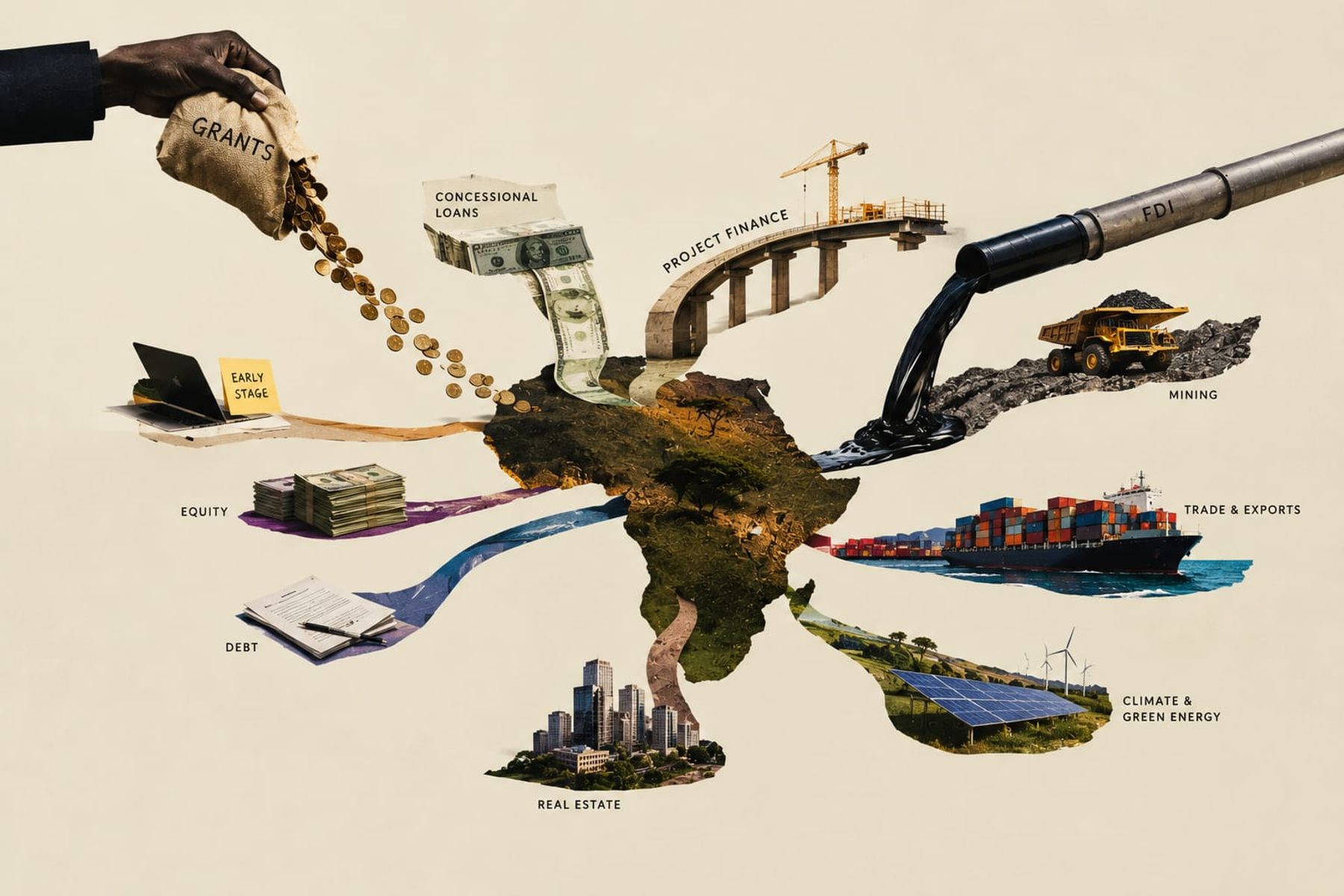
We keep seeing big numbers about how much money is going into Africa. African startups raised $4.1 billion in 2025. They raised $1.4 billion in the first half of 2026. Africa pulled in $70 billion in foreign investment.
The numbers are real. I’m not disputing them. I just don’t think they tell you much on their own. The question is what kind of money it is.
A dollar of equity buys a piece of your company. A dollar of debt wants to be paid back, with interest, on a schedule, whether you had a good quarter or a bad one. Those two dollars look at your business in completely different ways. And when things go wrong, they behave very differently.
So when people say funding is “coming back” to African startups, I’m a bit skeptical of how that’s being read. Money is coming back, yes. But much of it is coming back as debt, and that changes the story more than the headline lets on.
I can’t lie, for a long time I didn’t know what half of these words meant. So, quickly:
Equity (venture capital) is someone giving you money for a piece of the company. You never pay it back. If the company dies, they lose it; if it gets huge, they share in that. It’s the kind of money that can fund something with no revenue, because the investor is betting on what you might become.
Venture debt is a loan to a startup that already has something to show, usually revenue. You pay interest and sometimes the lender takes a small sliver of equity on top, called a “warrant.” You keep more of your company, which is the appeal. But somebody now expects their money back, so nobody lends until you can prove you’re good for it.
Asset-backed debt is a loan secured against certain things you own, like customer repayments or a fleet of solar kits. If you go under, the lender can take those assets. A lot of the big “startup debt” deals you read about in Africa are actually this.
Project finance is money raised against one tangible project, like a power plant, pipeline or mine, and repaid out of whatever that project earns. Nobody lends $5 billion for a pipeline because the pitch deck was nice. They lend against signed contracts and the asset itself.
And blended finance is when governments and development banks put in cheaper money, sometimes agreeing to take the first loss, so private investors feel safe enough to come in behind them.
None of these are interchangeable, and right now in Africa they’re moving in different directions.
You can’t really explain African startup funding without talking about US interest rates.
The Fed held rates near zero twice: for years after the 2008 crisis and again during Covid. When safe assets pay basically nothing, money goes wandering. Into tech stocks, crypto, late-stage startups, emerging markets and, eventually, us.
In 2019 African startups raised around $2 billion in equity. Then Covid came along and rates dropped back to zero, and the money flooded in: $6 billion in 2021 and $6.5 billion in 2022. Flutterwave, OPay, Chipper Cash, Andela and Wave became unicorns, and a lot of the cheques came from people who weren’t really Africa investors at all. Tiger Global. SoftBank. FTX, of all people. Most of it went to fintech.
The pitch was easy. Youngest population on Earth, hundreds of millions unbanked, smartphones everywhere, a chance to leapfrog the old banking system. All more or less true.
But I think a bigger driver was simpler and less flattering. There was just a lot of money in the world.
Matthew Klein and Michael Pettis make a version of this argument in Trade Wars Are Class Wars. As more and more income goes to people who already have plenty, they can’t spend it all, so they save it, and those savings have to go somewhere. Most of it goes to safe assets in rich countries. When those pay nothing, a little slice wanders out in search of a return. A very small slice ended up in Lagos and Nairobi. African startups have been about 1% of global venture funding, and often less.
So the boom wasn’t only Africa “becoming investable.” It was also the rest of the world having nowhere better to put its cash.
The Fed started hiking in March 2022. Once you could earn 4 or 5 percent on something safe, the case for a Series B in Lagos got a lot weaker.
2022 still looks like the record year on paper. But look closer and the growth was debt, which roughly doubled from about $800 million to $1.55 billion. Equity had already peaked in 2021. Funds were still spending money they’d raised during the cheap years, which delayed the hit.
It arrived in 2023. Funding dropped 46%, to $3.5 billion, and then again in 2024 to $3.2 billion. The global funds left first, and they’d been writing the biggest cheques.
Currencies made all of this worse, and I don’t think that gets talked about enough. Investors put in dollars. The companies earn naira, shillings and pounds. When Nigeria floated the naira in mid-2023, it lost nearly two-thirds of its value against the dollar. The Egyptian pound lost about two-thirds between 2022 and 2024. You could have twice your revenue at home and still be worth less to a dollar investor than you were before.
Then came 2025: $4.1 billion. It looks like a recovery, and it sort of is. But the money that came back isn’t the money that left.
Debt is the big one. It was 41% of African startup funding in 2025, around $1.64 billion, up from 17% in 2019. Not in a straight line, either. It was around 35% in 2023 and actually dropped to 31% in 2024 before jumping.
Then, in the first quarter of 2026, something really new happened. By Condia’s count, startups raised more than $490 million in debt and debt-like deals versus $212 million in pure equity. Debt had never beaten equity in a quarter before.
You can read that two ways. The gloomy version is that the risk-taking money left and lenders filled the gap. Partech’s version is more upbeat: more African startups are now big enough, profitable enough and well-run enough to borrow.
I think both are true. What scares me isn’t that debt grew. It’s that equity didn’t.
Climate is the other shift. Africa: The Big Deal counted 38% of 2025 funding going to climate startups. That’s less a breakthrough than a bounce back, since it was about the same in 2023 and dropped to 34% in 2024. In the first half of 2026 it was 39%.
A lot of that was off-grid solar in 2025. d.light raised $300 million in debt; Sun King raised $156 million.
I don’t think that’s because everyone suddenly started caring about climate. Solar just looks exactly like what a lender wants to see. There’s a physical asset, customers paying every month, revenue you can track, and a development story that fits nicely in an annual report. Put that next to a software startup still working out its business model and it’s not hard to see why the money went where it went.
Equity, on the other hand, is basically flat. Strip out the debt and you’re left with about $2 to $2.5 billion a year, and the earliest stage is the worst.
In 2025, pre-seed was about 1.5% of funding, around $46.5 million. In the US it’s more like 4 to 6%. Some of that gap is probably reporting, since lots of small African rounds don’t get tracked. But not all of it. If you’re three founders with a prototype, good luck.
And the money that does come is incredibly concentrated. In the first half of 2026, the top 30 startups took 84% of everything. Spiro, the e-motorbike and battery-swap company, raised $327 million on its own, about a quarter of the whole half-year.
That was mostly equity, and it was big enough to flip the Q1 story. Debt was ahead after the first quarter on Condia’s count, but by Africa: The Big Deal’s numbers, the half closed at about two-thirds equity and one-third debt.
So the recovery is real. It’s just narrower, more debt-heavy than it was, and not very open to anyone at the earliest stage.
If you follow the incentives, most of this stops being surprising.
A lot of the work is now done by development finance institutions (DFIs): IFC, BII, Proparco, FMO, DFC. They aren’t looking for the next unicorn. They want to build markets and eventually get paid back, so they lend.
In the first two months of 2026, there were four Series A deals, down from 13 in the same months of 2025, and reports at the time said all four had a DFI involved. Solar suits them for the same reasons it suits any lender.
The early stage has a different problem. Very risky companies depend, a few steps up the chain, on grants, aid and concessional money, and that pool is shrinking fast.
Global aid fell 23% in 2025 to $174 billion, the biggest one-year drop on record. US aid fell about 57%. The UK cut too. Bilateral aid to sub-Saharan Africa fell about 26%.
My initial thought was that DFIs would be next, because they put in 42% of the money raised by African private capital funds in 2024. Mostly, they aren’t. They lend off their own balance sheets and recycle what gets repaid. In the same OECD data, bilateral grants were down 29%, while aid routed through private-sector instruments actually rose 13%.
What’s shrinking is the layer above the DFIs: the grants and first-loss money that make the riskiest deals possible at all.
I find it easiest to picture it as a ladder:
Grants and very cheap money
↓
Concessional loans
↓
DFI loans
↓
Commercial debt
↓
Equity
The higher up you go, the less the money needs back. The stuff at the top is what makes the first risky steps cheap enough to try. When it shrinks, everyone below gets more careful.
The companies that feel it first are the ones that haven’t made any money yet.
It’s also worth saying that the whole startup market is tiny next to everything else coming into the continent.
Foreign direct investment into Africa was about $70 billion in 2025, down from $94 billion in 2024, a year inflated by one giant Egyptian deal. That’s roughly 17 times the startup market, and almost none of it is going into apps. It’s energy, infrastructure and mining.
Egypt took around $15 billion. Guinea went from about $1.4 billion to $7.8 billion, mostly on mining and the Simandou iron ore project.
Project finance is bigger again. The East African Crude Oil Pipeline is around $5 billion. Tanzania’s planned LNG project is priced at around $42 billion, but after more than a decade of talks it still hasn’t reached a final investment decision. And the IEA estimates that Africa needs more than $190 billion a year in energy investment between 2026 and 2030.
Blended finance is supposed to be the bridge. In FY26, IFC mobilised $73.6 billion of private capital globally, and the World Bank Group as a whole mobilised $112 billion. Africa’s share was about $22 billion, up from $9 billion in FY2022, which is real progress.
But Africa still draws in less private money per blended dollar than somewhere like Latin America, and the development banks are still doing most of the lifting.
The pattern is hard to miss. The bigger the pool of capital, the more it is tied to something physical, a contract, or a cash flow you can predict. The small, speculative pool is the part that swings with whatever comes next from the Fed.
I don’t think the lesson is that there’s no money in Africa. There’s loads. It just isn’t looking for the same things it was five years ago, and “youngest population in the world” doesn’t open doors anymore.
The question I’d be asking isn’t “who will give me money?” It’s “what kind of money can my business actually carry?”
An equity investor wants to know how big you could get. A lender wants to know if you can pay them back. Project financiers care about the asset and the contracts around it, and DFIs want all of that plus governance and impact reporting. Same company, read four different ways.
Which means the boring stuff matters more than the deck. Keep proper books. Create a real financial model instead of a hockey stick. Know what one customer, one loan or one solar kit actually costs you and earns you.
Keep your contracts, licences and tax records organised, so a stranger can understand your business without three months of back-and-forth.
And match the money to what you’re doing with it. Don’t sell equity to fund inventory if a loan would do, and don’t borrow against an idea that hasn’t made a dollar.
Watch the currency too. Dollar debt against shilling revenue can sink a perfectly healthy company in one devaluation.
Between a $4 billion startup market and multi-billion-dollar megaprojects, there’s a huge layer of businesses that don’t fit either world: cold-chain operators, food processors, logistics firms, manufacturers, smaller energy companies.
They have assets and customers and real revenue. They’re too small for project finance and too physical for VC. What they need isn’t a $100 million round. It’s more like $2 million, $5 million or $10 million of debt that has been properly structured.
The trouble is that many of them are hard to lend to. Not necessarily because the business is bad, but because it’s hard to read from the outside. The financials are muddled, contracts are in a drawer somewhere, and cash flows aren’t lined up cleanly.
That’s what people mean by making a business “legible” to capital, and I think it’s going to matter a lot over the next few years.
Plenty of good African businesses don’t need another pitch deck. They need to be understandable to the people who could finance them. And those financiers need ways to understand them that don’t involve months of manual work. There’s a real opportunity somewhere in there.
The headline numbers will keep coming every quarter, and I’ll probably keep reading them. But the number is the least interesting part.
What the money expects back, and who can actually get it, tells you a lot more.